mofstructure
Python tools for analysing and manipulating metal-organic frameworks and other porous materials.
Read the documentationConsulting / Dinga Wonanke
I help research teams solve chemistry and materials problems through computational modelling, scientific AI and research software. My digital chemistry work connects molecular insight and materials predictions to literature, experimental data and synthesis, so computational results can guide practical experiments.
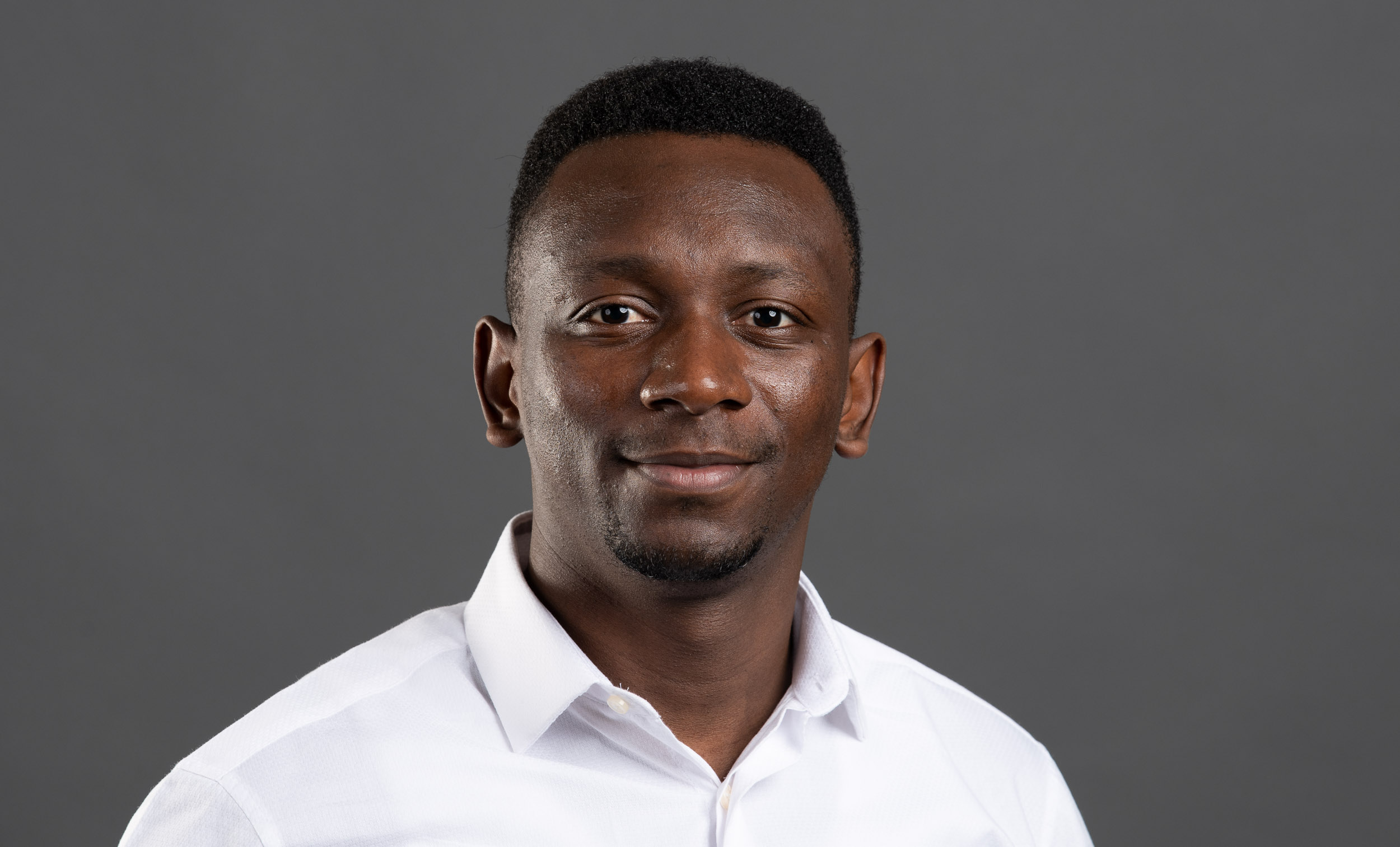
My background spans theoretical chemistry, molecular modelling, machine learning and research software. I work from the scientific question through method selection, implementation, validation and documentation.
My research backgroundPython tools for analysing and manipulating metal-organic frameworks and other porous materials.
Read the documentationExplore ligand, metal salt and solvent combinations used in MOF synthesis, with linked FAIR-MOFs records.
Explore ChemInteractionCurated crystal structures, material descriptors and synthesis information for computational materials research.
Explore the datasetOpen-source molecular cage construction and isomer enumeration.
Explore the source codeA scientific workspace for materials design, simulation and analysis.
Explore StructSubPeer-reviewed research provides further context for my scientific methods and experience.
Selected publicationsThese are research, software and founder projects demonstrating relevant capabilities; they are not presented as paid consulting case studies.
Digital chemistry connects computational modelling to synthesis.
Across these four areas, I combine molecular and materials modelling with chemical information extracted from literature, experimental data and research software. This connected workflow explains structure–property relationships, predicts plausible synthesis routes and prioritises candidates for experiments, while making computational methods more reproducible and accessible.
Use quantum chemistry and molecular simulation to understand how molecular and crystal structure shapes stability, reactivity and function. Link calculated properties and host–guest interactions with experimental evidence, providing a mechanistic foundation for materials discovery and synthesis decisions.
Enquire about this serviceConnect structures and predicted properties to experimental synthesis. Extract and organise chemical knowledge from literature, then combine it with crystal-structure data, computational screening and machine learning to identify plausible precursors and conditions. Prioritise candidates for validation in a digital chemistry workflow from computation to the lab.
Enquire about this serviceInvestigate porous materials, including metal–organic and covalent organic frameworks, for CO₂ capture, gas separation and hydrogen storage. Model pore accessibility and gas–framework interactions to compare candidates, interpret performance and guide attention towards materials that can be made and tested.
Enquire about this serviceScreen porous electrode materials for interactions with battery-relevant ions and clusters, then examine electronic, transport and electrochemical properties. Use the results to explain structure–property relationships and select promising candidates for synthesis and further evaluation.
Enquire about this serviceI welcome enquiries from the following kinds of organisations. These describe suitable collaborations, not an existing client list.
Computational modelling, materials informatics, scientific AI and technical workflow development.
Scientific product development, computational feasibility, specialist software and AI integration.
Research workflow development, simulations, technical advisory and data-driven modelling.
Specialist computational support, software development, scientific AI and collaborative research tools.
Scientific-domain expertise, model integration, validation and specialist software development.
Projects requiring suitable chemistry, computational modelling or scientific software expertise.
01 Advisory
Focused advice, independent assessment, feasibility analysis or scientific technical direction.
Typical outputsConsultation, technical review and feasibility assessment.
02 Research & development
Scientific analysis, computational simulations, machine learning or a proof of concept.
Typical outputsComputational studies, scientific models and validated workflows.
03 Implementation
A working scientific application, automated workflow or integrated AI system.
Typical outputsScientific software, APIs, AI assistants and documented deployment.
Project scope, costs, deliverables and timelines are agreed following an initial discussion.
Discuss the scientific problem, objectives, available data and technical constraints.
Identify suitable computational, AI or software methods and evaluate feasibility.
Agree on deliverables, responsibilities, milestones and acceptance criteria.
Implement the agreed solution, evaluate results and document limitations.
Provide the agreed outputs, documentation and knowledge transfer.
I prioritise scientific reproducibility, transparent methods and practical value.
I understand that scientific and technical projects may involve sensitive research information, unpublished results and proprietary methods. Project scope, confidentiality, data handling, intellectual property and deliverables can be agreed before work begins.
My independent consulting is distinct from my academic employment and my role as founder of StructSub Ltd. It does not imply sponsorship or endorsement by Nottingham Trent University or any previous employer. Engagements are subject to applicable employment, contractual, licensing and professional requirements. Access and commercial use of research, software and intellectual property are agreed where applicable.
Tell me about the scientific problem, the data or tools you use, and what you hope to achieve. We can explore whether my expertise is a good fit.
dingawonanke@structsub.com