Theoretical and Computational Chemistry
Using electronic structure methods and molecular simulations to understand chemical bonding, molecular interactions and materials properties.
I’m Dr A.D. Dinga Wonanke, a computational chemist, research software developer and founder of StructSub. My work connects chemistry, artificial intelligence and materials science.
I enjoy asking how things work and turning scientific understanding into tools other researchers can use.
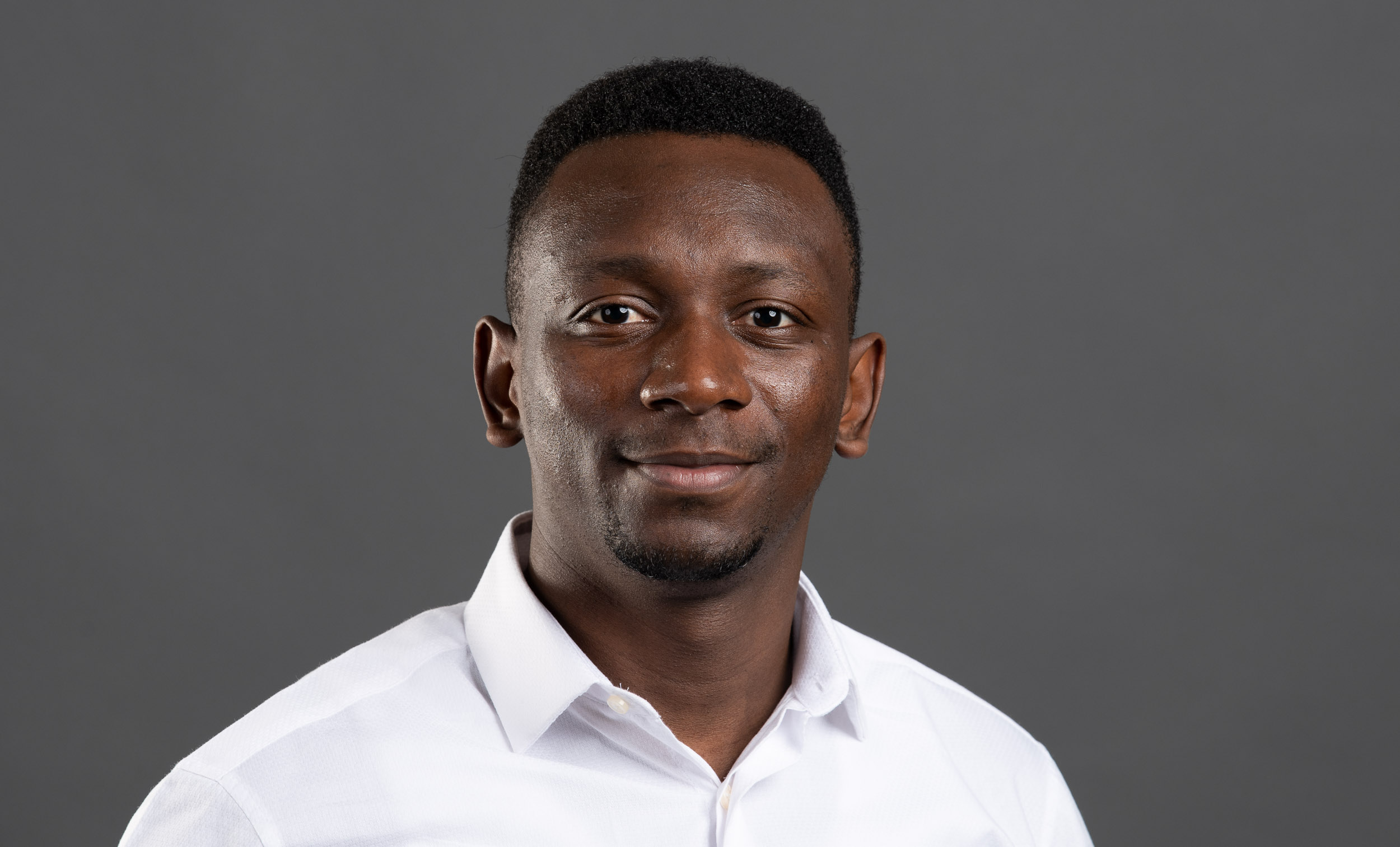
I have always been interested in understanding why things happen and finding ways to make difficult problems easier to solve. Chemistry gave me a way to ask those questions. Computational chemistry gave me the tools to investigate them, and software development allowed me to turn some of the methods I use into tools other researchers can benefit from.
Over time, my research has moved from understanding molecular reactions to predicting the structures, properties and synthesis of advanced materials. I use quantum chemistry, molecular simulation, machine learning and scientific data to answer questions that are difficult to address through experiments alone.
What motivates me is not simply predicting a promising material on a computer. I want to help close the gap between discovering a material, making it in the laboratory and finding a useful application for it.
I believe scientific ideas should not be limited by the complexity of the tools needed to explore them.
I want scientists to spend more time asking questions and less time preparing calculations, processing files and repeating tasks that could be automated. This shapes both my research and the software I develop.
Much of my research concerns metal-organic frameworks, covalent organic frameworks and other functional materials for applications such as gas separation, carbon dioxide capture, hydrogen storage and energy storage. I am particularly interested in the connection between a material's structure, its properties and the conditions required to synthesise it.
I have developed methods for processing crystal structures, extracting synthesis information from scientific publications and training models that link three-dimensional structures to experimental synthesis conditions. This work has contributed to open scientific datasets and software, including mofstructure.
One challenge I keep returning to is reproducibility. A synthesis procedure can look straightforward in a paper, yet important details may be absent or ambiguous. Understanding which experimental conditions matter, and how knowledge can be transferred from one material to another, is essential if computational discovery is to translate into reliable laboratory results.
Using electronic structure methods and molecular simulations to understand chemical bonding, molecular interactions and materials properties.
Investigating porous and functional materials, including MOFs, COFs and related systems, for applications such as gas adsorption, energy storage and separations.
Using machine learning to investigate relationships between chemical structures, properties, experimental conditions and synthesis outcomes.
Creating structured datasets, extracting chemical knowledge and developing computational representations that support scientific analysis and reproducibility.
Building scientific libraries, tools, interfaces and computational workflows that allow researchers to work more efficiently.
Exploring how simulations, AI models, scientific tools and experimental feedback can be integrated into connected scientific workflows.
I develop computational tools for working with molecular and crystal structures, organising scientific data, performing analysis and automating complex workflows.
Some of these tools are open source, while others contribute to larger research and product-development projects.
For me, developing software is not separate from doing science. It is another way of making scientific knowledge useful.
As a researcher, I know how much time can be spent preparing to do science rather than doing science. A new materials idea often means building structures, converting files, moving between specialised programs, setting up calculations and interpreting output before the next question can even be asked.
I founded StructSub Ltd to make that process easier. It began with a practical idea: researchers should be able to modify molecules and materials without spending hours writing scripts. It has since grown into a browser-based scientific workspace that brings structure building, modification, simulation and analysis closer together.
My longer-term goal is to develop an intelligent workspace where researchers can describe what they want to investigate, explore possible structures, run appropriate calculations and examine results in a connected workflow. AI can help with parts of that process, but the science must remain transparent, and researchers must remain in control of the decisions.
StructSub is still growing. There is much to improve and validate, but its purpose is clear: give researchers more time to investigate ideas and make computational methods more accessible.
My academic research, founder activities and independent scientific consulting are distinct professional roles. Learn about my consulting services.
My journey began in Cameroon and has taken me from secondary school and university studies to research positions in New Zealand, the UK and Germany. Here is that journey in reverse chronological order, from my current role back to its beginnings.
Senior Postdoctoral Fellow
I returned to Nottingham Trent University to continue research on functional materials, including how the arrangement of chemical groups influences pore behaviour and guest interactions. Alongside this work, I founded StructSub to translate years of experience in computational chemistry and software development into tools researchers can use directly.
As a Marie Skłodowska-Curie Postdoctoral Fellow, I focused on connecting predicted materials with experimental synthesis. I extracted synthesis information from scientific literature and developed models to predict synthesis conditions from crystal structures. During a research exchange at KIT, I also gained practical experience with synthesis and automation.
At KIT, I worked on FAIR materials data and software. I helped curate a large collection of metal-organic framework structures and developed tools for analysing their building units, connectivity and porosity. This work strengthened my commitment to reusable scientific software and reliable data.
My first postdoctoral position broadened my work to separation science, crystal structure prediction and porous materials. I also taught scientific Python and supervised research students. This was an important period in developing my interest in scientific data and tools that others can use.
I completed my PhD in theoretical and computational chemistry, developing quantum-mechanical approaches to study molecules undergoing light-induced cyclisation reactions. It taught me how powerful modelling can be, but also how much remains between a calculation and a successful synthesis. Read my thesis.
I completed my BSc and MSc in Chemistry here, laying the foundations for my interest in molecular behaviour and computational research.
I completed my secondary education here and earned my General Certificate of Education (GCE) Ordinary Level and Advanced Level qualifications.
I enjoy meeting people, exchanging ideas and connecting researchers with complementary expertise. Some of the most rewarding parts of my work are collaborations, explaining difficult ideas and helping another researcher take the next step.
I value mentorship and clear communication. Science moves forward when researchers share methods and help others use them.
To me, success is more than publications, grants or awards. I want my work to be useful beyond academia. In time, I hope to support education, research and healthcare in communities with limited resources, including Cameroon, and help make scientific tools more accessible.
My family and faith shape how I think about success. I want to do work I believe in and use what I learn to help others.
I want researchers to move from a materials idea to a credible synthesis plan, then to a material they can make and test. Better models, reliable experimental data and automation can support that process. So can collaboration between computational and experimental researchers.
No single tool or person can solve these challenges. I want my work to help researchers spend less time managing workflows and more time testing ideas.
Get in touch to discuss a research problem or potential collaboration.